
The last month has brought not one but two positive developments for those interested in achievement-based routes to obtaining a Green Card in the US.
The first is the January 28, 2026, decision rendered in the Mukherji v. Miller case in which a federal district court judge in Nebraska found that the two-step process (“Kazarian framework”) employed by USCIS in adjudicating EB-1A cases was defective at inception because it violated the Administrative Procedure Act (APA).
In plain English, it means that once you meet at least three out of the ten types of evidence listed in the regulations, you have met the requirements. USCIS shouldn’t deny based on “final merits.” This is good news because I know quite a number of people fall into this category of meeting at least three criteria but failing the “final merits” test.
The second news came last week when the Department of State (DOS) issued Visa Bulletin showed that the Dates for Filing chart for the EB-2 is now “current.” Let’s break this down a little starting with what the two charts are, why do we even have two charts, how the recent travel bans affect this and then what it all means for, say, a US-based Nigerian applying for the EB-2 NIW.
The court’s ruling is a massive win for EB-1A petitioners.
But the focus of this article is on the second piece of news about the March 2026 Visa Bulletin.
Two Tables (or Charts)
Every month, the DOS publishes two charts:
1. Application Final Action Dates: This is the strict chart. It shows when a Green Card is actually authorized to be issued to you.
2. Dates for Filing Applications: This is the generous chart. It dictates the earliest date you can submit your Adjustment of Status (Form I-485) paperwork to get in line, even if a visa isn’t ready to be issued yet.
USCIS switches between these charts based on supply and demand. When there are more visas available than known applicants, they let us use the permissive “Dates for Filing” chart.
Quick History of the Two Charts
The two charts came into existence during the Obama administration, so it is a relatively new development. Before then, the government only published one set of “cut-off dates” to tell applicants when they could move forward.
But in September 2015, the White House decided to “modernize the legal immigration system and better track visa demand” so the Department of State (DOS) split the bulletin into two charts. It initially caused some confusion and lawsuits lol. USCIS decides which of the two to use some days after DOS publishes the charts. It has worked well since the rollout chaos that greeted it in the beginning.
How to Read the Charts
When you file an immigrant petition (like an EB-2 NIW), the date USCIS receives it becomes your “Priority Date.” I see some posts calling the approval date the Priority Date. That’s not true. Think of the date as your ticket number when you joined the line of applicants.
To read the bulletin, find your preference category (e.g., EB-2) and your country’s column. Because Nigeria does not have its own specific backlog like India or China, you look under the “All Chargeability Areas Except Those Listed” column. If the chart says “C” (Current), or if your priority date is earlier than the date listed, your number has been called.
Look at this table below, for example.
If you are a Nigerian and your priority date for your EB-2 application is October 13, 2024, and (very importantly) your EB-2 has been approved, then there is a green card available for you. You can proceed to adjust your status.
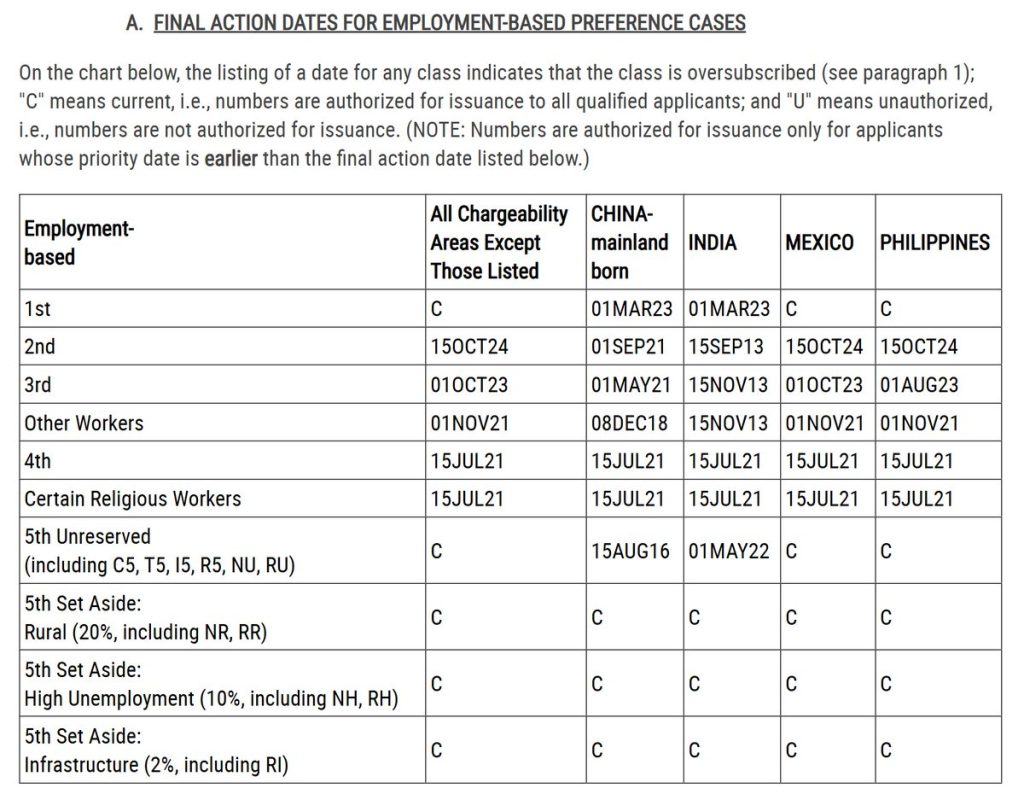
Now, if your priority date (the date USCIS receives your petition) is November 1, 2024, then you cannot adjust your status. You will need to wait until the dates move to November 1, 2024 or later before you can do so.
I said the news from last week is positive because instead of using this Final Action Dates chart, for March 2026, USCIS has decided to use the Dates for Filing chart. Let’s see how that looks.
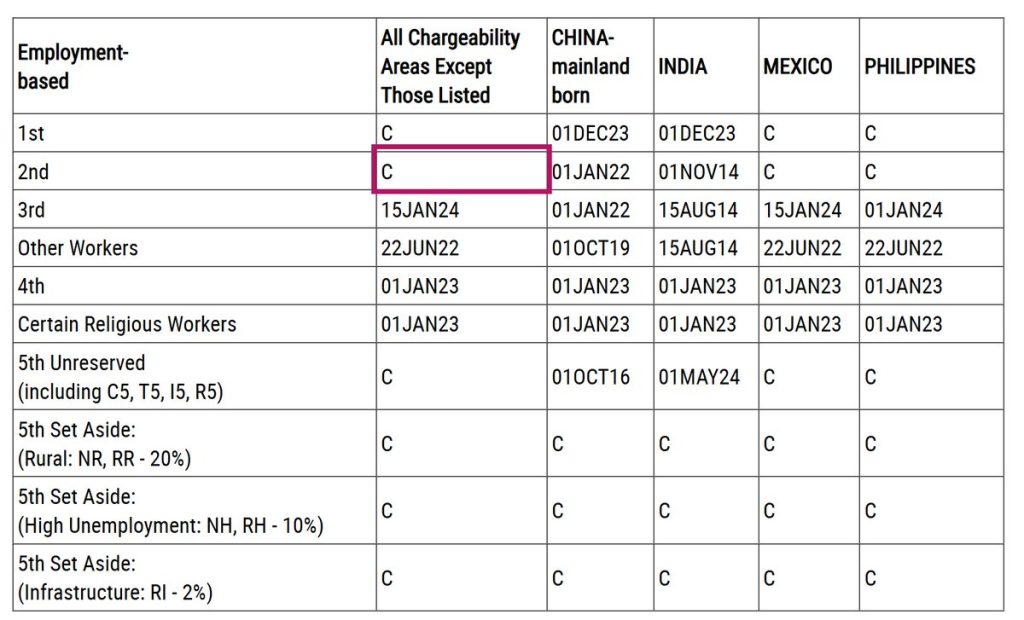
As you can see, the date under the EB-2 for the rest of the world is “C” or current. This means an approved EB-2 petitioner can adjust their status immediately.
What now, given the travel bans
On January 1st, USCIS directed their officials to place an “adjudicative hold” on all pending benefit applications filed by nationals of the restricted countries, which include Nigeria.
What happens if you concurrently file your Form I-140 (the EB-2 NIW itself), Form I-485 (for Adjustment of Status), and also applications for an Employment Authorization Document (EAD) and Advance Parole (travel document)?
First, please know that you can still file. The hold does not stop you from submitting your application and entering the system.
But, the processing pauses at the finish line. A “hold” means your case proceeds through normal processing, but USCIS is legally barred from issuing a “final adjudication” (an approval or denial) while the hold is in place.
Let me be clear: There are no interim benefits for now. I see so much false information out there. I like to set the right expectations. Unfortunately, standard EADs and Advance Parole applications based on a pending I-485 are not exempt from this hold. You will not receive your work or travel benefits while the hold remains active.
Do Your Thing Anyway
I know the lack of immediate work and travel benefits is frustrating but filing your I-485 right now is still a win. Getting your application into the USCIS pipeline locks in your place. Visa dates frequently “retrogress” (move backward) later in the year when demand spikes. By filing while the chart is “Current,” you protect yourself from being locked out of the queue later.
Remember, an adjudicative hold is just a pause, not a permanent denial. Administrations change, litigation occurs, and policies are constantly modified. We have seen sweeping bans implemented and eventually lifted before. This won’t be any different.
Control what you can control. If your priority date is current, get your paperwork filed, secure your spot in the pipeline, and stay ready.
As always, I am here to clear up any confusion you have about getting a permanent residency in the United States based on your record of achievements.
Important note: I am an immigration consultant, not an attorney. This article is for informational purposes only and does not constitute legal advice.