
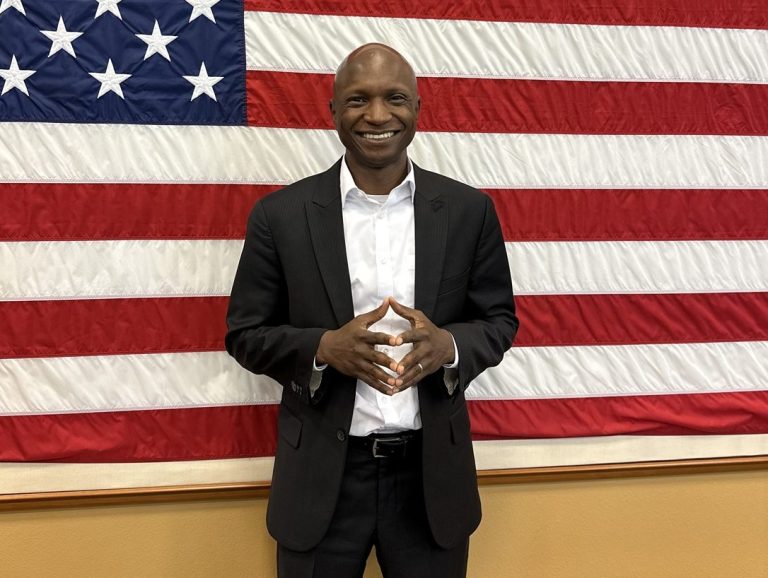
I came to the United States in late 2007 to start my PhD in Chemical Engineering on an F1 (student) visa. After graduation, in 2012, I was lucky to get a great job with an International Oil Company (IOC).
I began the job with Optional Practical Training (OPT) work authorization. I took the job partly because they offered to sponsor my H1-B work visa. The simple written agreement we had was that when my H1-B visa was up for renewal, in three years, they would proceed with both the renewal and start petition for the Green Card via the EB2 pathway.
But in the third quarter of 2014, oil prices started tumbling. It went from over $100 to below $30 by the beginning of 2016. IOC’s fortunes rise and fall with oil prices. So when the oil price cratered, they started massive layoffs.
Fortunately, I wasn’t let go, but the plummeting oil prices made it difficult for the company to justify petitioning for my Green Card to the DOL/USCIS, especially when U.S. citizens were being laid off. One of the questions on the form the company needed to fill was “has there been any mass layoffs in the last six months?” Selecting ‘yes’ prohibits petitioning for a non-citizen.
In short, I was on my own. Luckily, they were able to renew my H1-B visa for another 3 years, but the door was now shut on a company-sponsored EB2 petition. It would take years for oil prices to recover, and I couldn’t recall any 6-month period at my company without layoffs in at least one division. This was when I started my research and found that I could self-petition for the same EB2 using the National Interest Waiver.
To be honest, I hadn’t just heard about the EB2 NIW at the time, I heard about it in my first year of working with the company, but I wasn’t interested because I thought I needed to have publications to qualify and also because I was thinking I had an ironclad deal with a big company.
With nothing to lose, I decided to pay closer attention to the EB2 NIW. I spent thousands of hours poring over Administrative Appeals Office petitions, deciphering the code on what gets approved and what gets denied. I bought every single DIY kit I could find on the internet, watched countless videos.
I would have used lawyers to save myself the stress, but all the lawyers I contacted turned me down because I didn’t have a published paper. I explained that my PhD work was industrial in nature. At that time, having a publication wasn’t a requirement for graduation in my program. They understood but still couldn’t risk taking my case.
This challenging period made me realize a profound truth: “If it is to be, it is up to me.” It taught me that waiting for rescue – be it from a government, a company, or any external entity – is often futile.
In life, the surest allies we have are God and ourselves. I spent months researching and then assembling my petition. The work became my primary job and my real job became a side hustle.
Not surprisingly, I had my worst performance score that year, but it was worth it, because I got the EB2 NIW approval.
In retrospect, I should have spent more time researching the EB2 NIW and gotten on a Green Card sooner. This is of course, the wise thing to do from a job security and lawful stay perspective. But it is also a smart thing to do from a career advancement perspective. Why do I say that? The H1-B visa is very restrictive. It restricts you to the job, to the company and to the location. Let me explain. When I started working, my title read “Technical Safety Engineer” and I was located in New Orleans. These were the parameters of my H1-B visa. If I changed my job, or my company, or my location, I had to re-file for the H1-B visa. As a result, most times, you are locked in, with no chance of advancement. In my case, this caused me to become complacent since I knew I was not going anywhere. I couldn’t be promoted, or transferred to another location for “broadening opportunities” or take a different role to expand my skill sets. Consequently, I stayed in the same position for 5 years with no promotion.
In the 5 years after I got my EB2 NIW approval, I had 3 promotions, whereas I got zero promotion in the 5 years before. The reason was partly because the company now knew that I could leave so they made opportunities available and I also felt free because I knew I could leave so I worked better. If you are already working in the US on a H1-B or similar work visas (e.g. O, L, etc.), I strongly recommend you look into the EB-1A or EB2 NIW.
Today, I am a blue-passport carrying American citizen. I can tell you that it is all very much worth it. This is why I am passionate about helping people put together the strongest petition their profile can support. It helps them both to have job security and to advance their careers so they can live the life they want.
When I first landed in this beautiful country, in New York, an older friend picked me up at the airport and showed me around New York City. I can’t forget what he told me. He said, “Mike, this is where all your hard work will pay off.” He was right. This is a land of opportunities, and this is the best place on earth to get rewarded for all the education, expertise and experience you have so meticulously gained over the years.